
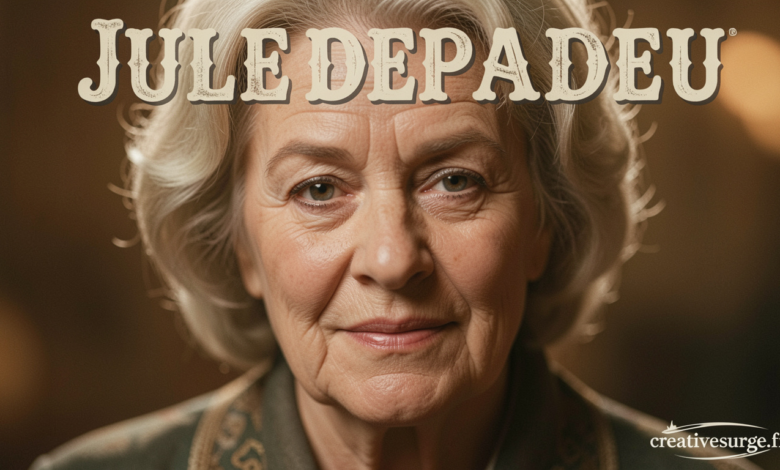
Julie Depardieu : Le Talent Incroyable d’une Actrice Unique in 2026

Introduction
Quand on parle de Julie Depardieu, on pense immédiatement à une actrice qui a su se construire une identité forte, loin de l’ombre immense de son père Gérard Depardieu. Elle n’a pas volé sa place dans le cinéma français. Elle l’a conquise, rôle après rôle, avec une sincérité désarmante et un talent brut qui touche le public au plus profond.
Julie Depardieu est née le 18 juin 1973 à Paris. Depuis ses débuts, elle choisit ses projets avec soin. Elle ne cherche pas à jouer les grandes stars inaccessibles. Elle joue des femmes vraies, complexes, drôles ou bouleversantes. Et c’est exactement pour ça que vous l’aimez.
Dans cet article, vous allez découvrir tout ce qu’il faut savoir sur elle : son parcours, ses films marquants, sa vie personnelle, ses engagements et ce qui fait d’elle une actrice véritablement à part dans le paysage cinématographique français.
Qui est vraiment Julie Depardieu ?
Une enfance baignée dans le cinéma
Julie grandit dans une famille où le 7e art est une seconde nature. Son père, Gérard Depardieu, est l’un des acteurs les plus célèbres du monde. Sa mère, Élisabeth Guignot, est aussi comédienne. Son frère Guillaume Depardieu a lui aussi choisi la même voie avant sa disparition prématurée en 2008.
Pourtant, Julie ne suit pas un chemin tout tracé. Elle prend le temps de se former sérieusement. Elle intègre le Cours Florent, puis travaille avec acharnement pour trouver son propre style. Rien ne lui est offert sur un plateau. Elle construit tout avec ses propres mains, et ça se voit.

Un physique singulier, une présence magnétique
Ce qui frappe chez Julie Depardieu, c’est sa présence à l’écran. Elle n’entre pas dans les cases habituelles du cinéma français. Elle possède un visage expressif, une voix reconnaissable, et une capacité rare à incarner des personnages très différents les uns des autres.
Elle passe du drame à la comédie avec une facilité déconcertante. Elle fait rire aux éclats dans un film et vous brise le coeur dans le suivant. Ce registre étendu est l’une de ses grandes forces.
Les films qui ont fait la carrière de Julie Depardieu
« La Petite Lili » : la révélation (2003)
C’est ce film de Claude Miller qui révèle Julie Depardieu au grand public. Elle y joue un rôle ambigu, fort, plein de nuances. Les critiques sont unanimes. Le public tombe sous le charme. Et Julie reçoit le César de la meilleure actrice dans un second rôle en 2004. Un début fracassant.
Ce César change tout. Il valide son talent auprès de l’industrie et ouvre des portes qui n’auraient peut-être pas bougé autrement. Mais Julie reste humble. Elle continue à choisir ses rôles avec la même exigence.
« L’Adversaire » : un rôle glaçant
Dans ce film de Nicole Garcia tiré de l’affaire Jean-Claude Romand, Julie donne une performance intense et troublante. Elle joue une femme piégée dans un mensonge qui va détruire tout ce qu’elle aime. Elle réussit à rendre ce personnage humain, compréhensible, presque attachant malgré tout.
C’est ce type de choix courageux qui définit sa carrière. Elle ne fuit pas les rôles difficiles. Elle les cherche.
« Vous avez un message » et les comédies légères
Julie ne se limite pas aux drames. Elle explore la comédie avec le même sérieux. Elle participe à des projets plus légers, des films populaires qui touchent un public large. Elle prouve ainsi qu’elle n’est pas enfermée dans un genre unique.
Sa polyvalence est une richesse rare dans le cinéma français. Beaucoup d’acteurs s’enferment dans un registre. Pas elle.
Les séries télévisées : une seconde vie artistique
Depuis plusieurs années, Julie Depardieu investit aussi le petit écran avec succès. Elle tourne dans des séries françaises qui rencontrent un vrai public. La télévision lui offre des personnages récurrents, plus développés dans le temps, et elle s’y épanouit pleinement.
Les séries lui permettent aussi de toucher une nouvelle génération de spectateurs. Et cette nouvelle génération la découvre avec enthousiasme.
La vie personnelle de Julie Depardieu
Une femme discrète dans un monde de paillettes
Julie Depardieu parle peu de sa vie privée. Elle protège son espace personnel avec une rigueur que l’on respecte. Dans un milieu où l’on expose tout, elle choisit de garder l’essentiel pour elle.
On sait qu’elle est mère. Elle parle de ses enfants avec beaucoup d’amour et de pudeur dans les rares interviews où elle aborde le sujet. Elle veille à ne pas mélanger sa vie publique et sa vie familiale.
La mort de son frère Guillaume : une douleur immense
En octobre 2008, son frère Guillaume Depardieu décède des suites d’une pneumonie. Il avait 37 ans. Ce deuil frappe toute la famille Depardieu de plein fouet. Julie ne cache pas sa douleur. Elle rend hommage à son frère plusieurs fois dans la presse.
Cette épreuve la marque profondément. Elle la rend peut-être encore plus sensible dans son jeu, encore plus consciente de la fragilité de la vie. Les acteurs qui ont traversé de vraies douleurs jouent souvent avec plus de vérité. Et Julie en est l’exemple parfait.
Sa relation avec son père Gérard Depardieu
La question revient souvent : comment vit-on en étant la fille d’un géant du cinéma ? Julie y répond avec franchise. Elle reconnaît que le nom Depardieu porte une charge énorme. Mais elle affirme qu’elle a toujours voulu exister par elle-même, pour elle-même.
Elle n’a pas suivi son père aveuglément. Elle a tracé sa propre route. Et le fait qu’on parle d’elle pour son travail, et non uniquement pour son nom de famille, montre qu’elle a réussi ce pari difficile.
Julie Depardieu et son rapport au métier d’actrice
Une méthode de travail rigoureuse
Julie Depardieu se prépare avec sérieux pour chaque rôle. Elle n’improvise pas sa carrière. Elle lit, elle travaille le texte, elle s’imprègne de son personnage longtemps avant le premier jour de tournage.
Elle parle souvent de l’importance du travail collectif sur un plateau. Pour elle, un bon film est avant tout une aventure humaine. La confiance entre les comédiens et le réalisateur est fondamentale. Elle cherche toujours cette alchimie particulière.
Le choix des projets : qualité avant quantité
Julie ne tourne pas dans n’importe quoi. Elle préfère attendre le bon rôle plutôt que d’enchaîner les projets alimentaires. Cette exigence lui vaut parfois moins de visibilité que d’autres actrices plus prolifiques. Mais elle préserve ainsi la cohérence de sa filmographie.
Quand vous regardez sa liste de films, vous ne voyez pas de rôles bâclés. Chaque participation semble réfléchie, assumée, voulue. C’est une marque de respect envers le public et envers elle-même.
La comédie, un terrain d’expression totale
Beaucoup d’acteurs de drame regardent la comédie de haut. Pas Julie. Elle considère la comédie comme un exercice technique exigeant. Faire rire un public est difficile. Beaucoup plus difficile qu’on ne le croit.
Elle aborde les rôles comiques avec la même préparation que les drames. Et le résultat est souvent bluffant. Elle possède un timing comique naturel, une façon de placer un regard ou une réplique qui déclenche l’hilarité sans avoir l’air d’essayer.

Les engagements de Julie Depardieu
Une voix dans le débat culturel français
Julie Depardieu s’exprime sur la culture, le cinéma, les conditions de travail dans le milieu artistique. Elle ne cherche pas à faire de la politique, mais elle défend des valeurs claires : la création, la liberté d’expression, le soutien aux artistes indépendants.
Elle participe à des événements culturels, soutient des jeunes compagnies de théâtre, et utilise sa notoriété pour mettre en lumière des projets qui n’ont pas les moyens de se faire entendre seuls.
Le théâtre : retour aux sources
Julie Depardieu revient régulièrement au théâtre. Pour elle, la scène reste le lieu de la liberté absolue. Pas de montage, pas de retake. Juste le texte, les comédiens et le public en direct.
Elle monte des pièces classiques et contemporaines. Elle explore des textes exigeants. Le théâtre la ressource artistiquement et lui permet de prendre des risques que le cinéma, souvent plus commercial, ne lui offre pas toujours.
Ce que les critiques disent de Julie Depardieu
Une reconnaissance unanime de la profession
Les critiques de cinéma français parlent de Julie Depardieu avec un respect sincère. Ils saluent sa capacité à surprendre, son intelligence dans le choix des rôles, et sa technique irréprochable.
Plusieurs grands réalisateurs français ont dit publiquement qu’ils souhaitent travailler avec elle. C’est le signe le plus clair de son statut dans l’industrie. Quand les cinéastes vous recherchent, c’est que vous avez quelque chose d’unique à offrir.
Le public : un lien affectif fort
Au-delà des critiques, c’est le lien avec le public qui définit une vraie carrière. Et ce lien, Julie Depardieu l’a construit patiemment, film après film. Le public la reconnaît, l’apprécie, lui fait confiance.
Ce capital de sympathie est rare. Il se mérite. Et Julie le mérite pleinement.
Conclusion
Julie Depardieu est bien plus qu’une actrice issue d’une famille célèbre. Elle est une artiste à part entière, qui a su s’imposer par son talent, son exigence et sa sincérité. Elle choisit ses rôles avec intelligence. Elle joue avec vérité. Elle touche le public avec une facilité qui ne doit rien au hasard.
Sa carrière est encore loin d’être terminée. Les meilleurs rôles sont peut-être devant elle. Et vous pouvez parier qu’elle les saisira avec la même fougue et la même rigueur qui la caractérisent depuis ses débuts.
Quel est votre film préféré de Julie Depardieu ? Partagez votre avis en commentaire, et faites découvrir cet article à ceux qui ne connaissent pas encore cette actrice incroyable.

FAQ : Les questions que vous posez sur Julie Depardieu
1. Quel est l’âge de Julie Depardieu ? Julie Depardieu est née le 18 juin 1973. Elle a donc 52 ans en 2025. Elle reste une des actrices les plus actives et les plus respectées de sa génération.
2. Julie Depardieu a-t-elle gagné des César ? Oui. Elle remporte le César de la meilleure actrice dans un second rôle en 2004 pour son rôle dans « La Petite Lili » de Claude Miller. Une récompense amplement méritée.
3. Qui sont les parents de Julie Depardieu ? Son père est Gérard Depardieu, acteur mondialement connu. Sa mère est Élisabeth Guignot, également comédienne. Julie a grandi dans un univers artistique très riche.
4. Julie Depardieu joue-t-elle aussi dans des séries ? Oui. Ces dernières années, elle participe à plusieurs séries télévisées françaises avec beaucoup de succès. Le petit écran lui offre des personnages profonds et des histoires longues à développer.
5. Quel est le lien entre Julie et Guillaume Depardieu ? Guillaume Depardieu était le frère de Julie. Il décède en octobre 2008 à l’âge de 37 ans. Sa disparition est une douleur profonde pour toute la famille Depardieu.
6. Julie Depardieu fait-elle du théâtre ? Absolument. Julie revient régulièrement sur les planches. Elle considère le théâtre comme un espace de liberté et de risque artistique essentiel à sa pratique de comédienne.
7. Comment Julie Depardieu choisit-elle ses rôles ? Elle privilégie la qualité à la quantité. Elle cherche des personnages complexes, des projets porteurs d’un vrai propos. Elle n’hésite pas à attendre longtemps pour trouver le bon rôle.
8. Julie Depardieu est-elle active sur les réseaux sociaux ? Julie Depardieu reste discrète sur les réseaux sociaux. Elle préfère s’exprimer à travers son travail plutôt que via les plateformes numériques.
9. Quel est le film le plus connu de Julie Depardieu ? « La Petite Lili » reste probablement son film le plus emblématique, celui qui a révélé son talent au grand public. Mais elle compte de nombreuses autres oeuvres marquantes dans sa filmographie.
10. Julie Depardieu a-t-elle des enfants ? Julie est mère. Elle évoque peu sa vie familiale en public, par souci de préserver ses proches. Elle aborde ce sujet avec beaucoup de pudeur et d’amour.
also read: creativesurge.fr
À propos de l’auteur : Sophie Marcelin est journaliste culturelle et critique de cinéma depuis plus de douze ans. Passionnée par le cinéma français et européen, elle collabore avec plusieurs magazines en ligne spécialisés dans les arts et le spectacle. Elle aime mettre en lumière les parcours d’artistes qui font la richesse de la culture française, loin des sentiers battus.
