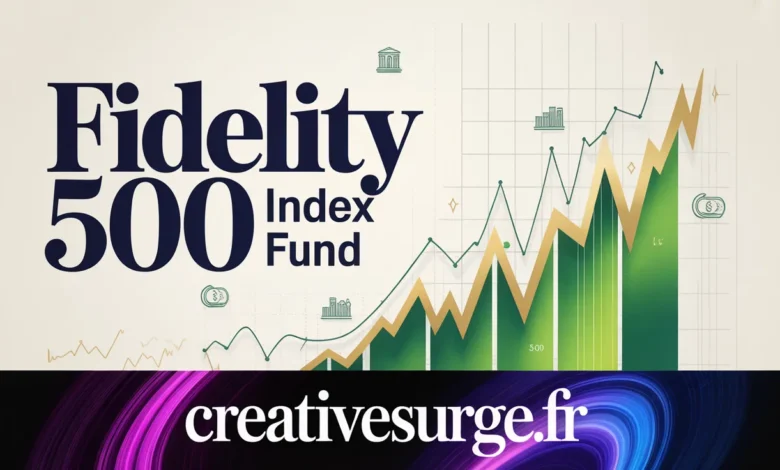
Fidelity 500 Index Fund: The Smartest, Simplest Way to Build Wealth 2026

Introduction
Most people want to grow their money without spending hours studying stocks. If that sounds like you, the Fidelity 500 Index Fund might be exactly what you need. It is one of the most popular, low-cost investment options available today, and for good reason.
The Fidelity 500 Index Fund tracks the S&P 500, which includes 500 of the largest publicly traded companies in the United States. When you invest in it, you own a tiny piece of giants like Apple, Microsoft, Amazon, and hundreds more. That kind of instant diversification is hard to beat.
In this article, you will learn what this fund is, how it works, how it compares to similar funds, and whether it is the right choice for your financial goals. By the end, you will have a clear picture of whether to add it to your portfolio.
What Is the Fidelity 500 Index Fund?
The Fidelity 500 Index Fund (ticker: FXAIX) is a mutual fund that mirrors the performance of the S&P 500 Index. It does not try to outsmart the market. Instead, it simply holds the same stocks as the index, in the same proportions. This passive investing strategy keeps costs incredibly low and returns remarkably consistent.
Fidelity launched FXAIX in 1988. Over the decades, it has become one of the largest mutual funds in the world by total assets. As of 2024, it manages over 00 billion in assets, which shows the level of trust investors place in it.
Key Fund Details at a Glance
- Ticker Symbol: FXAIX
- Expense Ratio: 0.015% (among the lowest available)
- Minimum Investment: /bin/sh (no minimum)
- Fund Type: Mutual Fund (not ETF)
- Benchmark: S&P 500 Index
- Dividends: Paid quarterly
Why the Fidelity 500 Index Fund Stands Out
You might wonder why this fund gets so much attention when there are thousands of mutual funds out there. The answer comes down to a few powerful advantages that are hard to ignore.
Ultra-Low Expense Ratio
The expense ratio of FXAIX is just 0.015%. That means for every 0,000 you invest, you pay only .50 per year in fees. Compare that to the average actively managed fund, which charges around 1% or more. Over 30 years, that difference in fees can cost you tens of thousands of dollars. Low costs compound just like returns do, just in your favor.
Zero Investment Minimum
One of the best things about the Fidelity 500 Index Fund is that you can start with as little as . Many competing funds used to require ,000 or more to get started. Fidelity removed the minimum entirely in 2018, making it accessible to everyone, including beginners just starting out.
Consistent Long-Term Performance
The S&P 500 has historically returned around 10% per year on average. The Fidelity 500 Index Fund tracks that almost perfectly. Since it is passively managed, it does not try to beat the market. It just matches it. And research consistently shows that over long periods, index funds outperform the majority of active funds.
How the Fidelity 500 Index Fund Works
Understanding how this fund operates helps you make a smarter decision. Here is a simple breakdown of its structure.
Passive Index Tracking
The fund buys all 500 stocks in the S&P 500 in proportion to their market capitalization. The largest companies like Apple and Microsoft get the highest weightings. When a company gets added to or removed from the S&P 500, the fund automatically adjusts. No active stock-picking takes place.
Dividend Reinvestment
FXAIX pays dividends quarterly. You can choose to receive them as cash or reinvest them automatically to buy more shares. Reinvesting dividends is a powerful wealth-building strategy. Over time, it accelerates compound growth in a meaningful way.
End-of-Day Pricing
Because FXAIX is a mutual fund and not an ETF, it prices once per day after the market closes. You cannot trade it during market hours like a stock. This is generally not an issue for long-term investors. In fact, it can reduce the temptation to make emotional, short-term trades.
Fidelity 500 Index Fund vs. Competitors
When choosing an S&P 500 index fund, you will likely compare FXAIX to similar offerings from Vanguard and Schwab. Here is how they stack up.
FXAIX vs. Vanguard 500 Index Fund (VFIAX)
- VFIAX expense ratio: 0.04% vs. FXAIX’s 0.015%
- VFIAX minimum: ,000 vs. FXAIX’s /bin/sh
- Both track the S&P 500 with nearly identical performance
- FXAIX wins on cost and accessibility
FXAIX vs. Schwab S&P 500 Index Fund (SWPPX)
- SWPPX expense ratio: 0.02% vs. FXAIX’s 0.015%
- SWPPX minimum: /bin/sh
- Performance is nearly identical between both
- FXAIX holds a slight cost edge
Honestly, all three are excellent choices. If you already invest with Fidelity, then the Fidelity 500 Index Fund is the natural and most cost-efficient pick. If you use Vanguard or Schwab, their equivalents are equally strong.
Who Should Invest in the Fidelity 500 Index Fund?
This fund works well for many types of investors. But it is not a perfect fit for everyone. Here is a breakdown of who benefits most.
Great Fit For:
- Beginners who want a simple, set-and-forget investment
- Long-term investors with a 10-plus year horizon
- Retirement savers using a Roth IRA, Traditional IRA, or 401(k)
- Cost-conscious investors who want to minimize fees
- Passive investors who do not want to pick individual stocks
May Not Be Ideal For:
- Investors seeking international diversification
- Those who need income right now (dividends are modest)
- Short-term traders who want intraday flexibility
- People with very low risk tolerance (the fund can drop 30 to 50% in a downturn)
How to Invest in the Fidelity 500 Index Fund
Getting started is easier than most people think. Follow these steps to invest in FXAIX.
- Open a Fidelity account. Go to Fidelity.com and open a brokerage account, Roth IRA, or Traditional IRA. It takes about 10 minutes.
- Fund your account. Transfer money from your bank. There is no minimum, so even 0 works to start.
- Search for FXAIX. Use the fund’s ticker symbol to find it quickly.
- Place your order. Choose the dollar amount you want to invest. Mutual funds allow fractional shares, so every dollar gets invested.
- Set up automatic contributions. The real wealth-building magic happens with consistent, recurring investments over time.
Tax Considerations for the Fidelity 500 Index Fund
Taxes matter when it comes to investing. Where you hold the Fidelity 500 Index Fund affects how much you keep.
Tax-Advantaged Accounts (Best Option)
Holding FXAIX in a Roth IRA means your gains grow tax-free and you pay no taxes on withdrawals in retirement. In a Traditional IRA or 401(k), your contributions are tax-deductible and you pay taxes only when you withdraw. Both options are far better than a regular taxable account for long-term investors.
Taxable Brokerage Accounts
In a taxable account, you pay taxes on dividends each year and on capital gains when you sell. FXAIX is still relatively tax-efficient compared to actively managed funds, because it generates fewer taxable events due to its low turnover rate. But a tax-advantaged account is still the smarter choice when available.
Common Mistakes to Avoid with Index Fund Investing
Even a simple investment like the Fidelity 500 Index Fund can go wrong if you make certain mistakes. Watch out for these.
- Selling during market downturns. The biggest mistake investors make is panicking and selling when the market drops. History shows the market always recovers.
- Waiting for the perfect time to invest. Trying to time the market rarely works. Time in the market beats timing the market almost every time.
- Ignoring rebalancing. If you hold multiple funds, check that your asset allocation still matches your risk tolerance once a year.
- Over-concentrating in one fund. FXAIX is US-focused. Adding international and bond funds can improve diversification.
Historical Performance of the Fidelity 500 Index Fund
Past performance does not guarantee future results. But looking at historical data gives you useful context.
- 1-year return (2023): approximately 26%
- 5-year average annual return: approximately 15%
- 10-year average annual return: approximately 13%
- Since inception (1988): roughly 10 to 11% annualized
These numbers tell a compelling story. A 0,000 investment in the Fidelity 500 Index Fund in 1988 would be worth well over 00,000 today, assuming dividends were reinvested. That kind of growth comes from patience, not cleverness.
Is the Fidelity 500 Index Fund Right for You?
Ultimately, this comes down to your goals, timeline, and comfort with risk. The Fidelity 500 Index Fund is not a get-rich-quick scheme. It is a slow, steady, proven approach to building real wealth over time.
If you want to grow your savings over the next 20 or 30 years with minimal effort and fees, it is hard to find a better option. I have seen countless investors over-complicate their portfolios with dozens of funds, only to underperform a simple FXAIX holding. Sometimes the simplest approach wins.
The key is consistency. Invest regularly, reinvest dividends, ignore short-term noise, and let time do the heavy lifting. The Fidelity 500 Index Fund is designed to work exactly that way.
Final Thoughts
The Fidelity 500 Index Fund is one of the most accessible, affordable, and reliable ways to invest in the US stock market. With a near-zero expense ratio, no investment minimum, and decades of strong performance, FXAIX earns its place in millions of portfolios.
Whether you are just starting out or optimizing an existing portfolio, the Fidelity 500 Index Fund deserves serious consideration. The best time to invest was yesterday. The second best time is today.
Are you already investing in FXAIX, or are you still deciding? Share your thoughts or questions below. And if this article helped you, consider passing it along to someone who is just getting started with investing.
Frequently Asked Questions
1. What is the ticker symbol for the Fidelity 500 Index Fund?
The ticker symbol is FXAIX. You can find it on Fidelity’s platform and on most financial data websites.
2. Does the Fidelity 500 Index Fund have a minimum investment?
No. Since 2018, Fidelity removed the minimum investment requirement for FXAIX. You can start with as little as .
3. What is the expense ratio for FXAIX?
The expense ratio is 0.015%, which is one of the lowest in the entire mutual fund industry.
4. Is the Fidelity 500 Index Fund the same as an S&P 500 ETF?
Not exactly. FXAIX is a mutual fund that tracks the S&P 500, similar to an ETF like VOO. The key difference is that mutual funds price once daily while ETFs trade throughout the day.
5. Can I hold FXAIX in a Roth IRA?
Yes, and it is a great idea. Holding FXAIX inside a Roth IRA lets your gains grow completely tax-free.
6. How often does FXAIX pay dividends?
The Fidelity 500 Index Fund pays dividends quarterly. You can reinvest them automatically or take them as cash.
7. Is FXAIX safe?
No stock market investment is completely safe. FXAIX can lose significant value during recessions. But over long periods, the S&P 500 has always recovered and reached new highs.
8. How does FXAIX compare to VOO?
Both track the S&P 500. VOO is an ETF from Vanguard with a 0.03% expense ratio. FXAIX is a mutual fund with a 0.015% ratio. FXAIX wins on cost; VOO offers intraday trading flexibility.
9. Can I invest in FXAIX outside of Fidelity?
FXAIX is exclusively available through Fidelity. To invest in it, you need a Fidelity brokerage or retirement account.
10. How much money can I make with the Fidelity 500 Index Fund?
Returns depend on how much you invest, for how long, and market conditions. Historically, the S&P 500 has returned about 10% annually. A 00 monthly contribution for 30 years could grow to over million at that rate.
Also Read Creativesurge.fr
Authro name: Johan Harwen
Email: johanharwen314@gmail.com
About the Author: Johan Harwen is a personal finance writer and investment educator with over a decade of experience helping everyday people build long-term wealth through smart, simple strategies. He specializes in index fund investing, retirement planning, and passive income. Johan has written for leading finance publications and runs a popular newsletter covering beginner to advanced investing topics. When he is not writing, Johan enjoys hiking, reading behavioral finance books, and mentoring first-generation investors. You can reach him through his website or follow his work on social media.